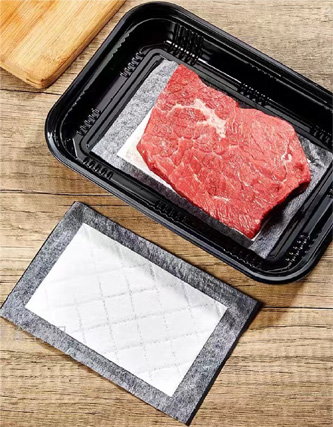
Absorbent pads
For fresh-food packaging
Discuss pad dimensions and sample needs for your packaging and liquid conditions.
Absorbent pads and PP trays. Find the right fit for your fresh-food packaging.
Loading the interactive view…
Illustrative form and layers. Not an actual SKU or a performance test.
Two product families, one clear selection process. Start with your application.
For fresh-food packaging
Discuss pad dimensions and sample needs for your packaging and liquid conditions.
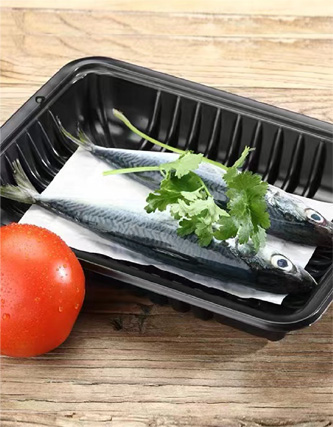
Packaging compatibility
Check internal dimensions, depth and packaging method before pairing a tray with a pad.
Photos reused from the existing website; ownership to be reviewed before launch.
Existing-site references and buyer questions, not final available specifications or test conclusions.
Liquid, time and packaging conditions matter as much as dimensions.
130 × 90 / 160 × 80 mm
Also 170 × 100, 180 × 100 and 180 × 120 mm. Models, tolerances and availability require confirmation.
Food / pack / liquid
Identify the food, internal tray dimensions, packaging method and actual conditions.
Test conditions matter
Compare the liquid, temperature, duration and method. No unverified absorption values are presented.
Check the combination of tray, pad and packaging process.
1414-44 / 45 / 46
Confirm the internal and external dimensions, depth, weight and availability of each model.
Dimensions / pad / seal
Confirm the food and packing process. PP alone does not demonstrate temperature or MAP suitability.
Review the use and region
Black color systems, recyclability and food-container restrictions vary. No universal compliance claim is made.
Start with the actual application, not a single generic absorption number.
Identify the food, tray dimensions and packaging method. Evaluate samples in the conditions you use.
Food condition, liquid and transport conditions belong in the sample discussion. Do not assume a universal result.
Identify destination markets, customer uses, models and pack quantities before discussing supply.
Dimensions, samples and documents first. These guides do not replace product testing or a compliance assessment.
Check the usable tray area, food arrangement and contact method, then evaluate sample fit. Existing-site sizes are starting references; final models and tolerances require confirmation.
Liquids, temperatures, duration and methods affect results. Compare test conditions and evaluate samples in your actual pack. Industry averages are not product performance evidence.
There is no universal answer. Review the use, pigment system, food-contact basis and local restrictions. PP alone does not prove global recyclability or temperature suitability.
Include the food, destination market, packing method, tray or pad dimensions and expected quantity with units. If information is incomplete, list the questions you need to resolve.
The existing Easyfresh website presents absorbent pads and related packaging products. This demo reorganizes product information, applications and buyer communication in Chinese and English.
武汉益益争鲜新材料科技有限公司
Confirm dimensions, materials and use.
Start with actual packaging conditions.
Check the scope, source and date.
No unverified capacity, customer count, certification or overseas-stock claims.
Identify your food, packaging and destination market. Next comes specification and sample discussion.
Demo result only. It was not sent to Easyfresh or saved on a server.